Linework vs Shading Tattoos: Which Technique Is Right for Your Ornamental Tattoo?
When people picture an ornamental tattoo, they usually think of intricate patterns and clean lines. But behind every piece we create at Sacred Ornaments, there's a deliberate choice between two core techniques: linework and shading. Understanding the difference isn't just technical trivia — it shapes how your tattoo looks today, and how it ages over the next ten, twenty, thirty years.
7/28/20262 min read
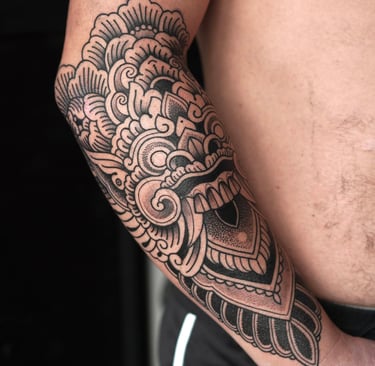
What Is Linework?
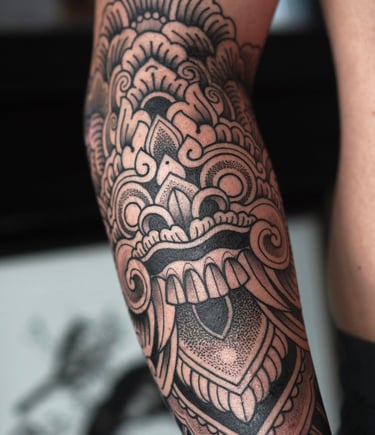
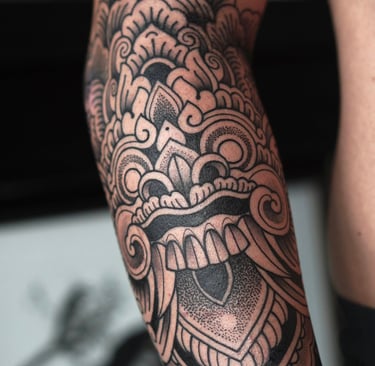
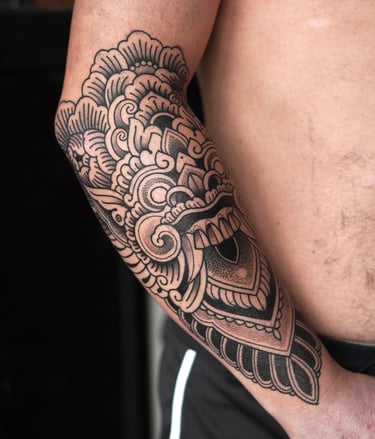
Linework is the foundation of most ornamental designs. It relies on clean, precise lines to build geometric patterns, mandalas, and detailed motifs without relying on gradients or fill. Every curve, every symmetry, every point where lines intersect has to be exact — there's no shading to hide an imperfect line.
This is why linework-heavy tattoos are often associated with precision and discipline. A single shaky line can throw off an entire mandala's symmetry. It's also why linework tends to age exceptionally well: thin, solid black lines hold their shape longer than soft gradients, which is part of why so many ornamental and geometric tattoos are built primarily around it.
What Is Shading?
Shading introduces depth, dimension, and movement. Instead of flat lines, shading uses varying needle pressure, dot density, or ink saturation to create gradients — light to dark, soft to bold. In ornamental work, shading is often used to make a mandala feel like it's glowing from within, or to give a piece the illusion of three-dimensional depth on flat skin.
Shading is more forgiving in some ways (blending covers minor inconsistencies) but far less forgiving in others — over time, soft gradients can fade or blur more than solid linework, especially without proper aftercare and sun protection.
Why We Combine Both
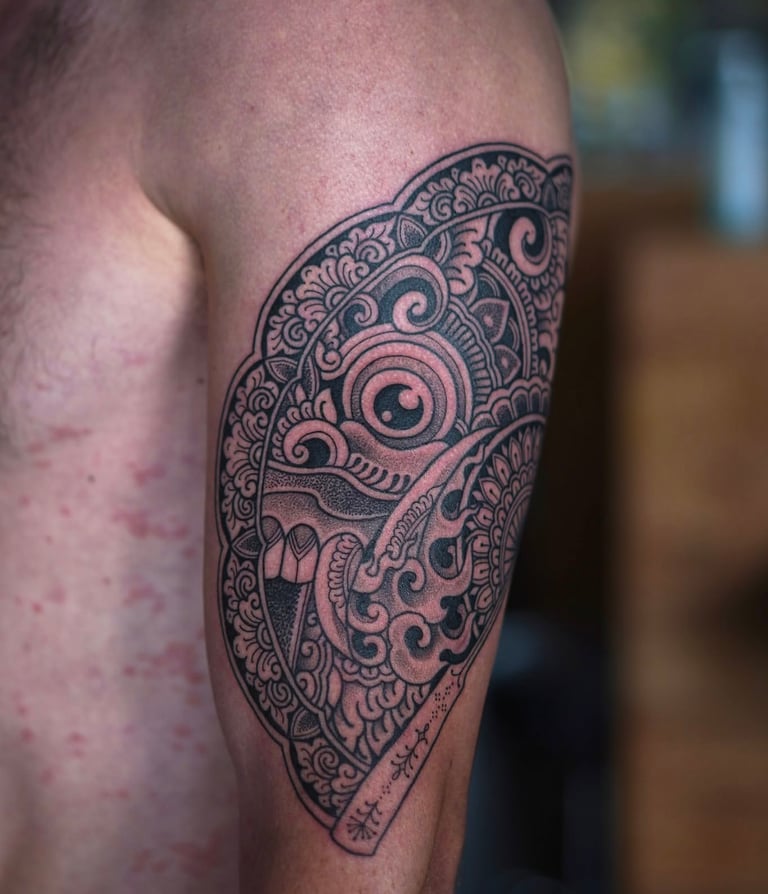
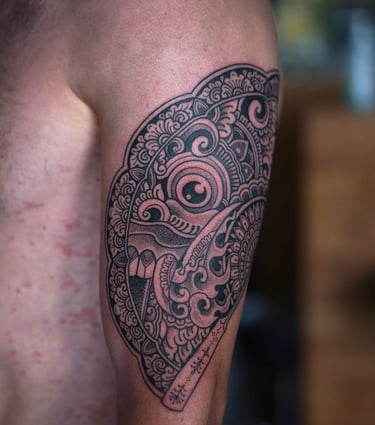
Most of our custom pieces at Sacred Ornaments aren't purely one or the other — they're a deliberate combination. Linework defines the structure and symmetry of a design; shading brings it to life, adding depth without losing the geometric precision that makes ornamental tattoos distinct.
The ratio between the two depends entirely on the piece. A mandala meant to sit crisp and graphic on the skin might be 90% linework. A back piece meant to feel like it flows with the body might lean heavily into shading and dotwork for texture.
Why This Matters When You're Choosing a Design
Knowing the difference helps you have a more informed conversation during your consultation. If you want something that reads sharp and geometric even from a distance, linework-forward designs age better and stay legible longer. If you want something with more visual depth and movement, shading adds that — but it deserves more attention during healing and sun exposure to keep it looking its best over the years.
At Sacred Ornaments, every design starts with figuring out which technique — or which balance of both — actually serves the story you're trying to tell on your skin.
FAQ
Does linework or shading hurt more?
Pain tolerance varies, but many clients report shading feels more intense due to repeated passes over the same area to build gradient, while fine linework tends to be quicker per line but can still be uncomfortable on bony areas.
Which technique lasts longer?
Solid black linework generally holds its crispness longer than soft shading, which can blur or fade faster — especially without proper sun protection and aftercare.
Can I combine both in one tattoo?
Yes — most ornamental pieces at Sacred Ornaments blend both, using linework for structure and shading for depth and dimension.
Does shading need more touch-ups than linework?
Often yes, since gradients are more prone to fading unevenly over time compared to solid lines.
sacred ornaments
Custom tattoos crafted with passion and precision.
Bali
Global
© 2025. All rights reserved.